
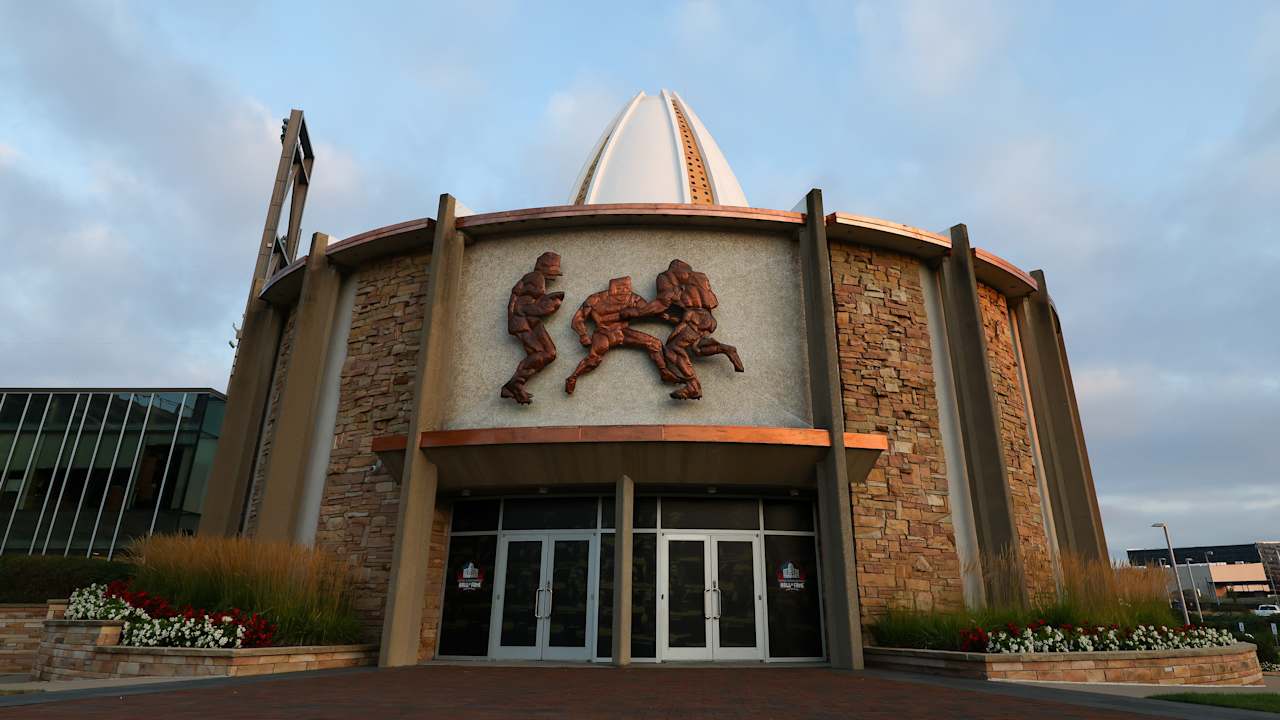

The Pro Football Hall of Fame is overhauling the selection process by eliminating a separate category for senior players, cutting the selection committee nearly in half and returning to in-person meetings.
The new procedures were approved by the Hall of Fame board following discussions with Hall of Fame staff, members and people on the selection committee. The changes announced on Friday will be in place for the Class of 2027. They come after the voting process drew heavy scrutiny for the most recent class, when six-time Super Bowl winning head coach Bill Belichick failed to get enough support for induction.
"The Hall of Fame's selection process has always been guided by integrity, thoughtful deliberation and a commitment to honoring those most deserving of football's highest individual honor," Hall of Fame president Jim Porter said. "We believe these changes both augment what has worked well while addressing opportunities to further strengthen a tradition that means so much to the game and everyone who loves it."
The Hall is cutting the size of the selection committee from 50 people to 28. Twenty-five of them will be eligible to vote each year, while the other three can only participate in the discussion of each candidate. The three nonvoters will rotate each year.
Previously, the panel had one representative for each of the 32 teams, 17 at-large voters including Hall of Famers Bill Polian, Tony Dungy, Dan Fouts and James Lofton, and one representative of the Pro Football Writers of America. Now there will be 27 at-large members, including some of those Hall of Famers, and one PFWA representative.
The Basketball Hall of Fame has a 24-person voting panel, while hockey has 18 people. The Baseball Hall of Fame has the largest voting body with 425 voters last year among members of the Baseball Writers' Association of America who have been writing about the game for at least 10 straight years.
The 28-person selection committee will follow a similar process as in the past. The initial list of nominees in the player category will be reduced to 50 players, then 25 semifinalists and 13 finalists. There will also be one coaching candidate and one contributor picked as a finalist who will be added to that group and considered with the players.
Players are eligible for the Hall after five years of retirement, but there will no longer be a split between modern era candidates and senior candidates. Seniors previously moved to a separate category after they had been retired for 25 years. That will reduce the number of player finalists from 18, including three seniors, to 13 among all players no matter when they retired.
Under the new rules, modern era players Willie Anderson, Marshal Yanda and Terrell Suggs will no longer automatically advance to the finalist stage after reaching the final seven in the Class of 2026.
A person not on the committee will present the 15 finalists at the in-person meeting, instead of one voter assigned to each finalist. The Hall had shifted to virtual meetings because of COVID but will go back to meeting in person. The meeting will be held closer to when the results are announced at NFL Honors during Super Bowl week to cut down on potential leaks.
The finalists will be reduced to 10 and then seven candidates, with all 15 in the same category instead of one group for modern-era players and another with coaches, contributors and senior players.
Voters will be able to vote for six people with 80% needed. The Hall said that would lead to a range of three to seven Hall of Famers each year, with by far the most likely number to get the necessary support being either five or six people. There were nine people selected the past two years after the last round of rule changes, down from an average of eight the previous four years. The four-person class in 2025 was the smallest in 20 years.
Under the system in place the past two years, voters could vote for five of the seven modern-era candidates, and three of the five from the coach, contributor and seniors. Previously, the committee had a final up-or-down vote on the final modern-era candidates, as well as seniors, coaches or contributors who were finalists. That led to most of those getting into the Hall, but that has now gotten more difficult.
The Hall also is changing the definition of the contributor category to allow consideration of a player and coaching career, along with contributions from off the field. That could help boost the candidacy of people like Bucko Kilroy, who played for 13 years before spending decades as a scout and executive, and Doug Williams, who was the first Black quarterback to start in the Super Bowl before working in the front office for Washington and Tampa Bay.
Copyright 2026 by The Associated Press
Source: www.nfl.com — Read the original article