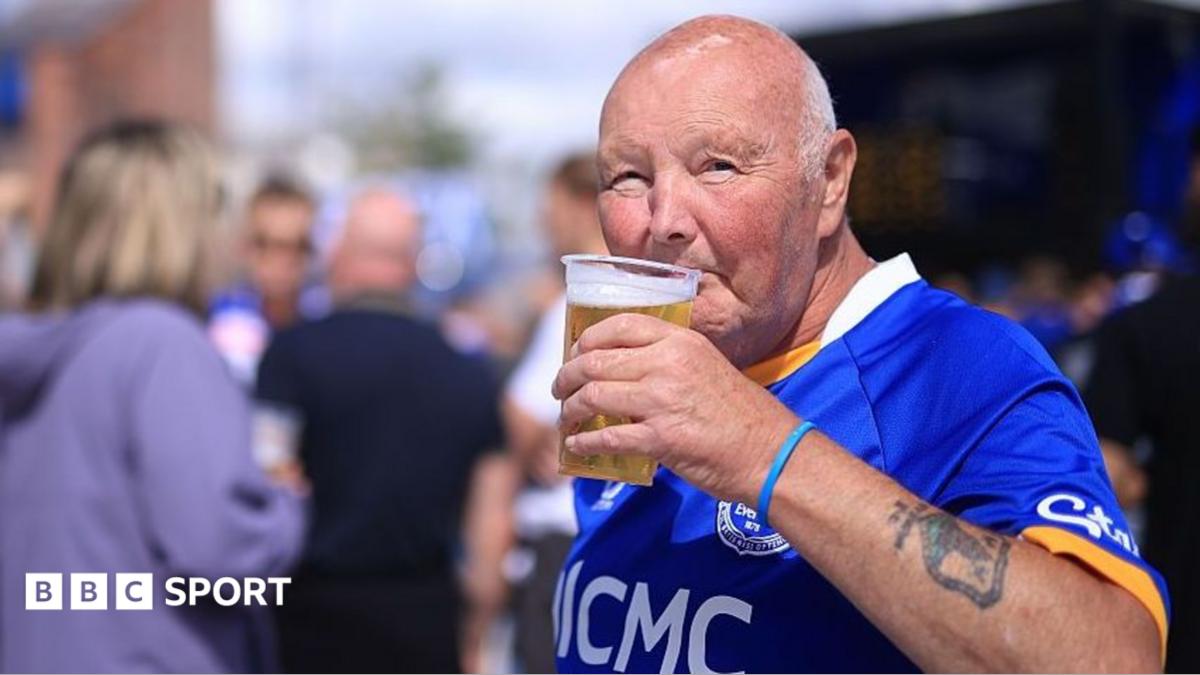

When UK Prime Minister Andy Burnham travelled to the United Nations in New York, he might not have expected a question about football fans drinking alcohol in grounds.
Burnham firmly believes the law that stops supporters from having a beer at their seat during a match is outdated. It is a position the Everton supporter has long held, and when asked he was happy to reaffirm it.
"I do believe there is a case to remove that discrimination," said Burnham, who feels football fans are singled out compared to those of other sports and events.
There is no suggestion this is about to become official government policy. Last year, MPs rejected a Conservative amendment to the Football Governance Bill that would have forced ministers to launch a formal consultation on scrapping the rule. That was, of course, before Burnham returned to Downing Street.
It is a complicated and divisive issue, not just about safety. But is it something that match-going supporters actually want?
Drinking alcohol at football grounds in England and Wales has been strictly controlled since the Sporting Events Control of Alcohol Act was introduced in 1985. It was brought in to counter escalating hooliganism through the 1970s and into the 1980s.
The ban affects clubs from the Premier League down to the National League. Beer can be sold, but it must be consumed in areas that do not have a view of the pitch. Yet fans who support teams in the National League North and South and below can drink alcohol around the pitch.
The ban is stricter in Scotland. A law in place since 1981 means alcohol is only available in hospitality areas and not for other fans. It was initially imposed following a riot during the 1980 Scottish Cup final between Rangers and Celtic at Hampden.
However, attitudes have been changing in recent seasons. It was lifted as part of a pilot scheme last year, with several Scottish clubs selling alcohol in clearly defined, monitored areas of the stadiums. It started with lower-level clubs and was eventually extended to the Premiership.
The Scotland national team joined the trial for the friendlies against Japan and Curacao earlier this year. The trial has been extended to games against Switzerland on 29 September and Slovenia next month.
The Women's Super League in England has just completed two seasons of successful trials. The rule preventing drinking in the stands has now been removed by the league's governing company, WSL Football. The women's game is not governed by the Sporting Events Control of Alcohol Act, enabling the competition organiser to make the change.
Is there support for the move within English football's corridors of power?
Premier League chief executive Richard Masters said in August the competition had not "got a specific view" and "we'd need to give it some really careful thought".
Source: www.bbc.com — Read the original article